Hemp Harvest Season: How Long Does it Take to Grow Hemp?

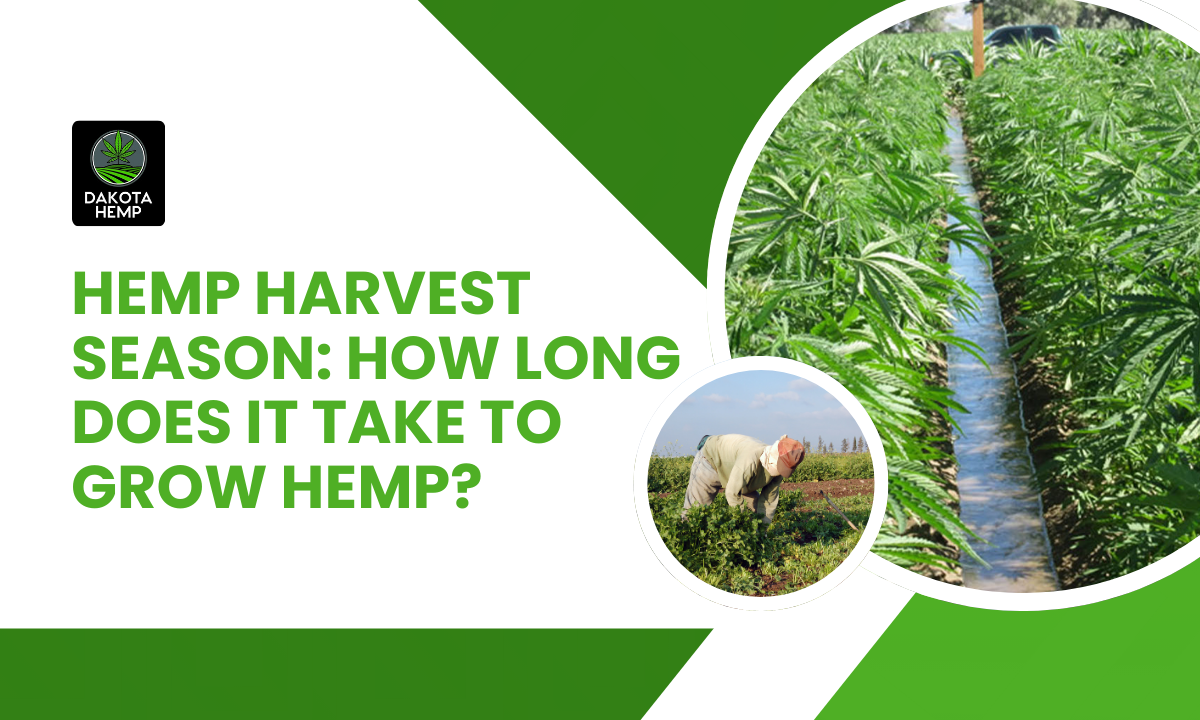
Ever wondered how a hemp farm works? The first question most people ask is always: “How long does it take?” While industrial hemp is one of the fastest-growing agricultural products on Earth (earning it the nickname “pioneer crop”), “seed to harvest” can mean many different things.
The Great Plains climate and your crop’s intended end-use can alter that timeline significantly. Whether your crop is grown for fiber, seed, or high-grade cannabinoid extraction, each day the plant spends in your soil matters. At Dakota Hemp, we practice complete transparency about our growing process. To us, that’s the only way to educate others about just how powerful this plant can be.
Seed To Harvest: Hemp’s Agricultural Lifecycle Explained
For the most part, industrial hemp takes anywhere from 90 to 150 days to fully mature. Here’s a basic breakdown of the hemp grow cycle at Dakota Hemp.
1. Planting/Germination (Days 1–14)
Industrial hemp’s life begins in late spring. Hemp seeds can germinate at soil temperatures as low as 50°F, but they truly thrive when the soil is warmer. Once planted in fertile soil, hemp seeds absorb water from the surrounding area and typically germinate within 3–7 days.
This period is crucial to the plant’s success. While they require plenty of moisture, the soil cannot be saturated. Young hemp plants will put all of their energy into forming a thick “taproot” that will grow down into the earth.
2. The Vegetative Stage (Weeks 3–12)
For many, this is the most exciting stage of hemp agriculture. During the plant’s vegetative stage, all of its energy is focused on getting as tall as possible. The Hemp Plant can grow at an astonishing rate of 2–3 inches per day if given the ideal conditions to thrive.
As mentioned before, hemp crops help reduce CO2 levels in the air dramatically. Not only does the plant absorb CO2 at a rate far greater than your average tree, but its long taproot will naturally work to break up the surrounding soil. Since hemp grows so densely, there isn’t a lot of room for weeds to take root. That means far fewer pesticides in Dakota Hemp fields!
3. The Flowering Stage (Weeks 12–16)
Somewhere around the middle of summer, the days will start to get slightly shorter. When hemp plants detect this change, they transition from the vegetative stage to the flowering stage.
- CBD/Cannabinoids: During this stage, farmers will exclusively harvest female plants and the resinous buds they produce. This phase can last anywhere from 4–6 weeks, but most cannabinoids and terpenes reach their peak during this time.
- Fiber: Fiber farmers usually harvest their crop as soon as they detect “flowering” has begun. Waiting too long can make stalks too woody for certain industrial hemp uses.
Why Hemp from the Great Plains Is Special
Midwest hemp agriculture is only possible because of our terroir. Silty clay soil that reaches several feet deep, combined with blazing summer sun and cold evening breezes, creates the perfect growing conditions for “hardy” hemp.
That’s right. Hemp grown in the Midwest has to be strong. Plants that can withstand cold, drying winds will produce a hardy profile. Indoor-grown hemp doesn’t face the same environmental challenges that hemp grown in the Dakotas does. By surviving Mother Nature, we believe our plants create a more well-rounded, or “complete,” plant extract.
What are the Benefits of Fast-Growing Hemp?
You might be wondering: why does it matter how long hemp takes to grow? Quite a bit, actually.
- Crop Rotation: Rotating through crops is one of the best ways to “reset” your soil for the next season. With hemp’s fast-growing nature, it can fit seamlessly into your crop rotation schedule.
- Bioremediation: Hemp is one of the best crops for “cleaning” your soil. It will absorb dangerous toxins and heavy metals, leaving your soil in better shape than before you planted.
- Sustainability: Hemp makes for an extremely sustainable crop. Need raw material for paper? Hemp can help. Building material? How about hempcrete? In just 3 months, one acre of hemp will produce more biomass than most crops will all season long.
Q&A: Frequently Asked Questions
Q: Can hemp crops withstand frost in the Dakotas? A: Young hemp plantings hate frost. If a heavy frost were to occur while hemp plants are young, it could destroy a crop. Harvest usually occurs before the fall frost in the Dakotas, but mature hemp plants can often pull through a light “killing frost.”
Q: How much water does hemp need? A: Hemp grows fairly drought-tolerant once it’s established, but it needs a lot of water in the early stages. Plants ideally need about 6 weeks of consistent moisture. Luckily for Dakota Hemp growers, Mother Nature usually has our backs!
Q: How is hemp grown for fiber different from hemp grown for oil? A: Hemp planted for fiber is laid extremely close together. By growing in tight squares, hemp plants will grow straighter and taller. Hemp intended for CBD production is spaced further apart to allow the plant to branch freely and produce flowers.
Q: Does Dakota Hemp use pesticides? A: Nope! As we mentioned before, there’s really no need. Hemp naturally resists pests and “chokes out” the weeds.
Q: When can you harvest hemp? A: Harvest time varies depending on the desired end-product. For cannabinoid production, most farmers will perform “trichome testing” to determine the perfect harvesting time. Once the glands on the hemp flowers turn from clear to milky white or amber, it’s time!
Q: Does a hemp crop negatively affect the soil? A: Not at all! If anything, hemp leaves your soil better than before you planted. Hemp grows quickly, which means it takes up a lot of nitrogen from the soil. To help replenish that nitrogen, most hemp farmers will plant a row of soybeans after harvesting hemp.
The Future Of Sustainable Hemp Farming
At Dakota Hemp, we know there is big potential for hemp agriculture. Growing a plant that is ready for harvest in as little as four months means farmers can produce sustainable fuel, medicine, and building materials while giving back to the earth.
Imagine what America’s farms could look like if we planted hemp and soybeans on alternating years. Not only would we produce massive amounts of sustainable materials and CBD, but our soil would be the richest in the world.
“We take what the land provides, and return even more to the soil.” – Hemp Farmers Against Marijuana Prohibition