
What is Hemp Hurd? The Woody Core Revolutionizing Sustainability

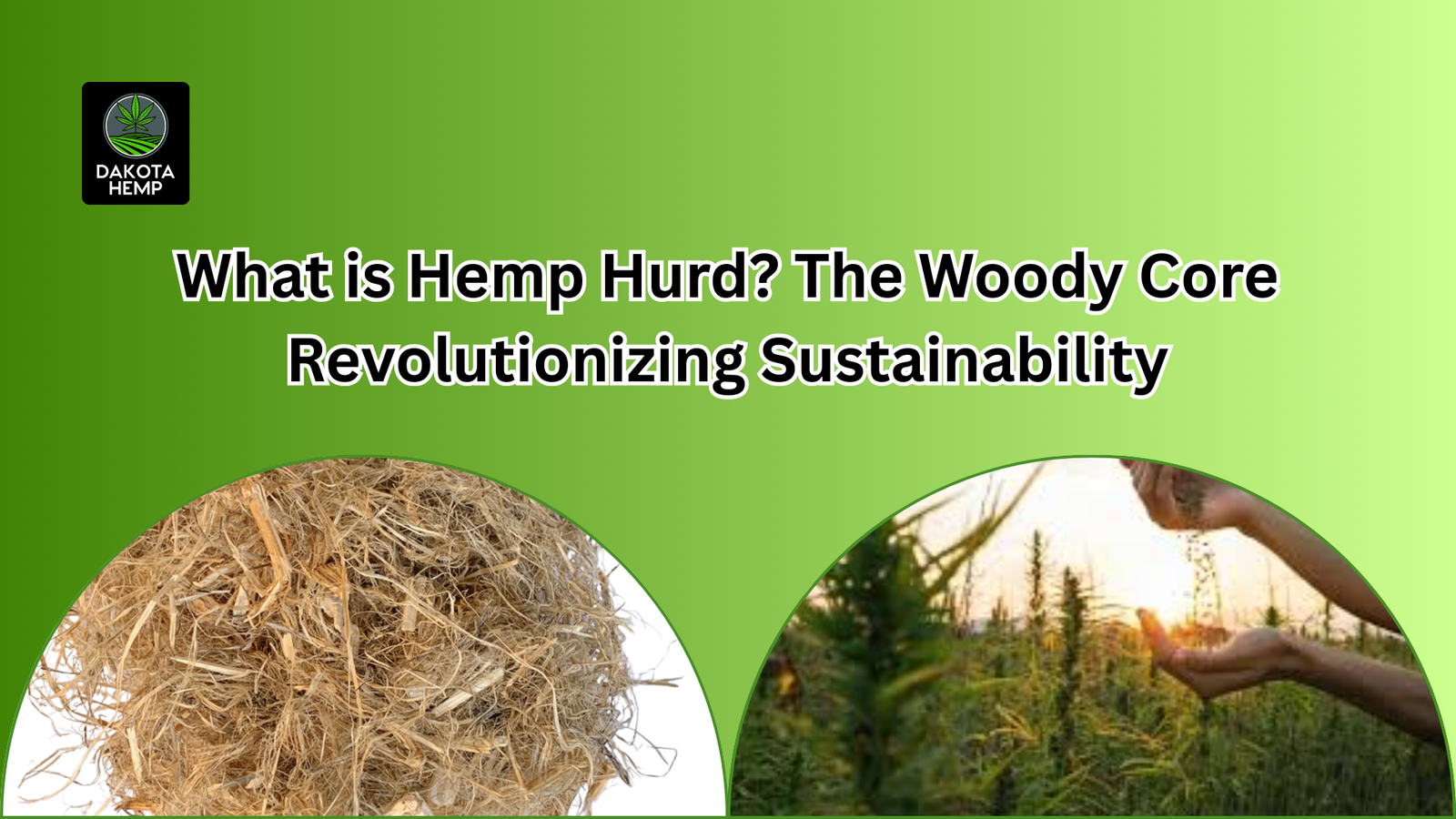
Everywhere you look, there are discussions about hemp’s incredible benefits. Whether it’s the powerful CBD oils or ultra-tensile fibers used in clothing, one plant continues to stun us with its versatility. Hemp hurd may be the plant’s “hidden hero.” This woody inner-core of the hemp stalk is quietly becoming one of the most valuable raw materials in the green economy. What exactly is hemp hurd, and what makes it so special? Let’s dive in.
When Hemp Meets Hedgehog: Understanding the “Shiv”
While discussing hemp hurd, people will often use the street term “shiv” to describe the woody biomass. At Dakota Hemp, we like to explain hurd by dissecting the stalk of the hemp plant because that’s where it comes from!
The Hemp Plant Has Two Main Parts:
- The Bast Fiber: The stringy outer layer of the stalk. This is used to make textiles, rope, and even bioplastics.
- The Hurd: The woody, inner core of the stalk. Hurd makes up approximately 60-70% of the plant’s total weight.
While these two components are attached in the plant, they can easily be separated by decortication. The hemp hurd is what remains once the fibers have been stripped away. At this stage, the woody core is typically ground down into small, light pieces (“shivs”). Hemp shiv is the most commonly used form of hurd due to its high cellulose and silica content, which help it naturally resist pests, fire, and rot.
Raw Materials: 3 Amazing Reasons to Love Hemp Hurd
Hemp hurd is known as the secret weapon of sustainability. Here are the biggest reasons our team loves it so much:
1. Insane Absorbency Rates
Hemp hurd has insane absorbency rates. It can hold up to 4-5x its weight in moisture! That’s significantly higher than wood shavings or straw. Also, hemp doesn’t just absorb moisture, it actually draws it away from surfaces via wicking action.
2. Superior Insulation Properties
Hemp hurd insulation is one of the best on the market. Because the tiny hemp fibers are naturally porous, hempcrete walls are filled with microscopic air pockets. These air pockets not only trap heat, but they also make hemp one of the best sound dampeners available.
3. Fighting Climate Change with CO2 Absorption
Hemp absorbs $CO_2$ as it grows! In fact, hemp crops are some of the fastest-growing $CO_2$ absorbers on Earth. As the plant grows, it “inhales” the carbon and stores it in the hurd. When used in construction or bedding, that hemp hurd effectively traps the carbon and prevents it from being released back into the atmosphere.
Putting Hurd To Use: High-Performance Applications
Like fiber, hemp hurd can be used for a variety of applications. Let’s explore what makes it so unique.
We Built a Building With Just Hemp Hurd: Hempcrete
The flagship product made from hemp hurd is Hempcrete. This material is created by mixing dried hemp hurd with lime and water to create a bio-composite wall material.
- Lightweight: Hempcrete blocks are about ⅔ the weight of traditional concrete.
- Porosity: Hempcrete actually “breathes.” Unlike wood or insulation, it transfers moisture through the walls, improving air quality.
- Fireproof: Combined with lime, hemp hurd is naturally resistant to flames.
Best Animal Bedding Material
If there’s one place hemp hurd truly shines, it’s as bedding for livestock. Hemp hurd is ideal for horses, chickens, small animals, etc.
- Low Dust: Hemp hurd produces next to no dust. Most horse owners know how important this is for animals with equine asthma.
- Odor Control: Hemp absorbs ammonia, reducing stall and coop odor dramatically.
- High Renewability: Hemp bedding can be composted after use, creating a rich natural fertilizer for your garden.
Garden Grooves: Hemp as Premium Mulch
Hemp makes a fantastic mulch and soil amendment for gardeners. Like animals, plants love hemp’s absorbency qualities!
- Improve Soil Health: Hemp hurd creates a carbon-rich capsule for soil microbes to feed on as it decomposes.
- Suppress Weeds: Just like wood chips, it prevents unwanted plants from taking root.
- Retain Moisture: Whether you’re in a rainy region or a desert climate, layers of hemp mulch help the soil retain water during dry spells.
Commodity Comparison: Hemp vs. Traditional Materials
| Feature | Hemp Hurd | Wood/Shavings | Fiberglass/Stone |
| Water Absorbency | 520% | 152% | N/A |
| Fire Resistance | Higher | Lower | Varies |
| Sustainability | Carbon Negative | Carbon Neutral | Carbon Positive |
Who Needs “Justify” When You Have Hemp?
As we’ve discussed here at Dakota Hemp, one of the coolest parts about hemp is how efficient it is. Farmers can grow fiber, seeds, hurd, Omega oils, and CBD, all from the same plant! In conclusion, it doesn’t get much more sustainable than that.