

Why Builders Are Finally Trading Concrete for Hemp: The Future of Your Home

For decades, the construction industry followed a simple, albeit flawed, mantra: bigger, faster, and cheaper. We ended up building houses that were essentially airtight plastic boxes. They kept the wind out, sure, but they also trapped everything else in. We started seeing high energy bills, a rise in “sick building syndrome,” and that dreaded black mold behind the drywall as the new normal.
But as we settle into 2026, the conversation has changed. Architects, contractors, and families are looking back to nature to find a smarter way to build. The breakthrough isn’t a new synthetic chemical—it’s Hempcrete.
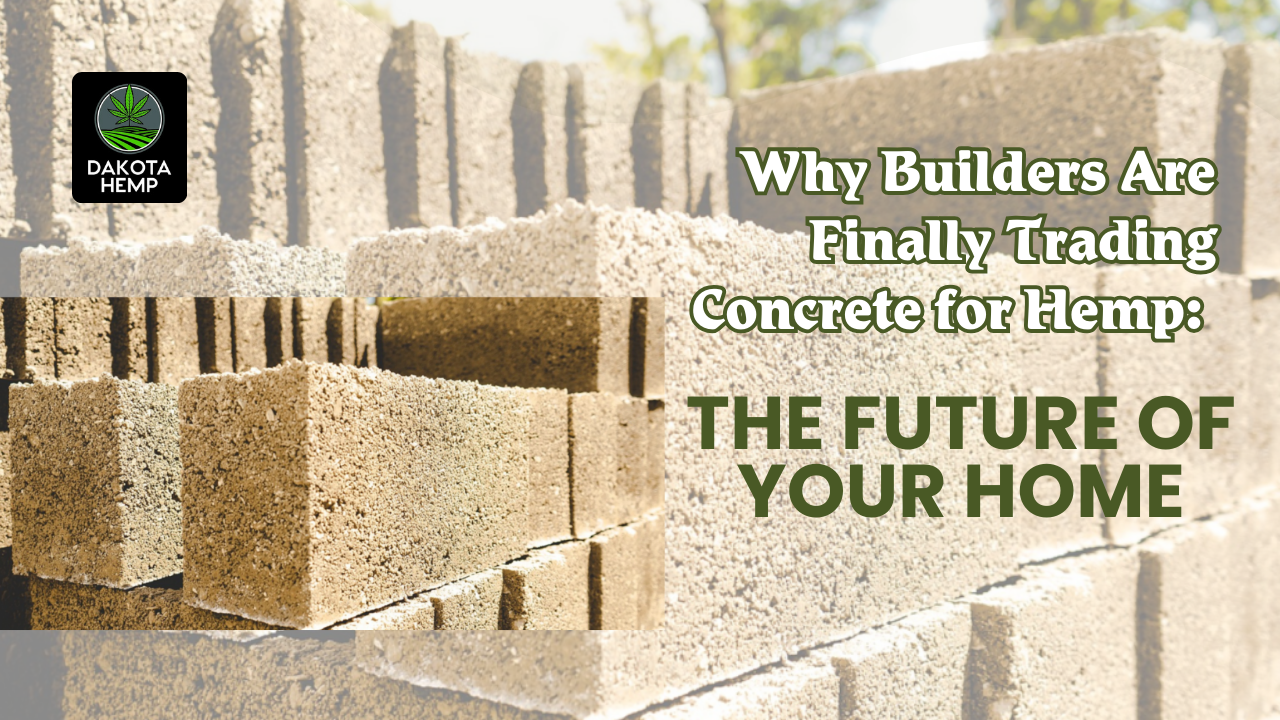
By mixing the woody core of the hemp plant (the hemp hurd) with a simple lime binder, we’ve found a way to build homes that don’t just sit on the planet—they actually work with it. Here’s why the smartest builders I know are making the switch.
1. A Wall That Actually “Breathes”
Standard modern homes rely on “vapor barriers”—basically giant sheets of plastic—to keep moisture out. The problem? It also keeps moisture in. Every time you take a hot shower or boil a pot of pasta, that humidity gets trapped.
Hempcrete works more like a high-performance athletic fabric. It’s naturally vapor-permeable.
- The Difference: It acts like a “third skin” for your house. When the air is damp, the walls absorb that extra moisture. When the air gets too dry, they release it back.
- The Feeling: You don’t just get a “green” house; you get a home that feels fresh. It smells better, stays at a steady humidity, and drastically cuts down on the respiratory issues that come with living in a stagnant, plastic-wrapped environment.
2. The Thermal “Double-Threat”
Usually, in construction, you have to choose: do you want a material that insulates (keeps the heat in) or one with thermal mass (stores heat)? It’s incredibly rare to find something that does both, but hempcrete is the unicorn of the building world.
- Natural Insulation: The porous texture of the hemp hurd creates millions of tiny air pockets that act as a massive barrier against the cold.
- Heat Storage: Because the walls are dense, they soak up heat from the sun during the day and “radiate” it back into your living room at night.
- The Result: We’re seeing builders report that hempcrete homes use up to 40% less energy for heating and cooling. That isn’t just a win for the Earth; it’s a win for your bank account every single month.
3. Living in a “Carbon Sink”
Construction is responsible for nearly 40% of global $CO_2$ emissions—mostly thanks to concrete. Hempcrete turns that statistic on its head.
Hemp is one of the fastest carbon-trapping plants on the planet. But it gets even cooler: as the lime binder in your walls cures over time, it undergoes a process called “carbonation.” It literally pulls $CO_2$ out of your local air and turns it into stone.
- Carbon-Negative: A typical hempcrete house actually locks away several tons of carbon. While other houses are adding to the problem, your home is actively cleaning the atmosphere while you sleep.
4. Real Safety: Fire, Pests, and Longevity
One of the first questions I get is, “Won’t a plant-based house burn down or get eaten by termites?” It’s a fair question, but the answer is a resounding “No.”
Because every bit of hemp is coated in lime, the final wall is practically indestructible to the usual home-buyers’ nightmares:
- Fireproof: In fire tests, hempcrete doesn’t support a flame. It might char slightly, but it won’t catch fire or release those toxic black fumes that come from burning synthetic insulation.
- Pest-Proof: Termites and rodents find the high pH of the lime incredibly hostile. They simply won’t touch it.
- Rot-Resistant: The lime is a natural antifungal. Even in humid climates, your walls won’t rot or grow mold.
Common Questions from the Job Site (FAQ)
“Can I build a whole house out of just hempcrete?”
Think of hempcrete as an elite “infill.” You still use a timber, steel, or concrete frame for the structural support, and then you “cast” the hempcrete around it.10 It makes the whole frame incredibly stiff and strong, but it’s not meant to hold up the roof on its own.
“What about living in rainy areas?”
It’s actually one of the best materials for wet climates because of how it handles moisture. You just have to finish the exterior with a breathable lime render (plaster) so the wall can continue to “exhale.”
“Is it going to break my budget?”
Upfront, the materials might cost a little more than the cheapest fiberglass and drywall. But when you look at the energy savings, the lack of mold remediation costs, and the fact that these houses can last for hundreds of years, it’s easily the more economical choice in the long run.
Conclusion: A Better Way to Build
At Dakota Hemp, we see this shift every day. Builders are finally realizing that we don’t have to choose between a durable home and a healthy planet. By using the hemp hurd grown right here in our own soil, we can build houses that are better for the people inside and the world outside.