How Is Hemp Harvested in Dakota? A Behind-the-Scenes Look

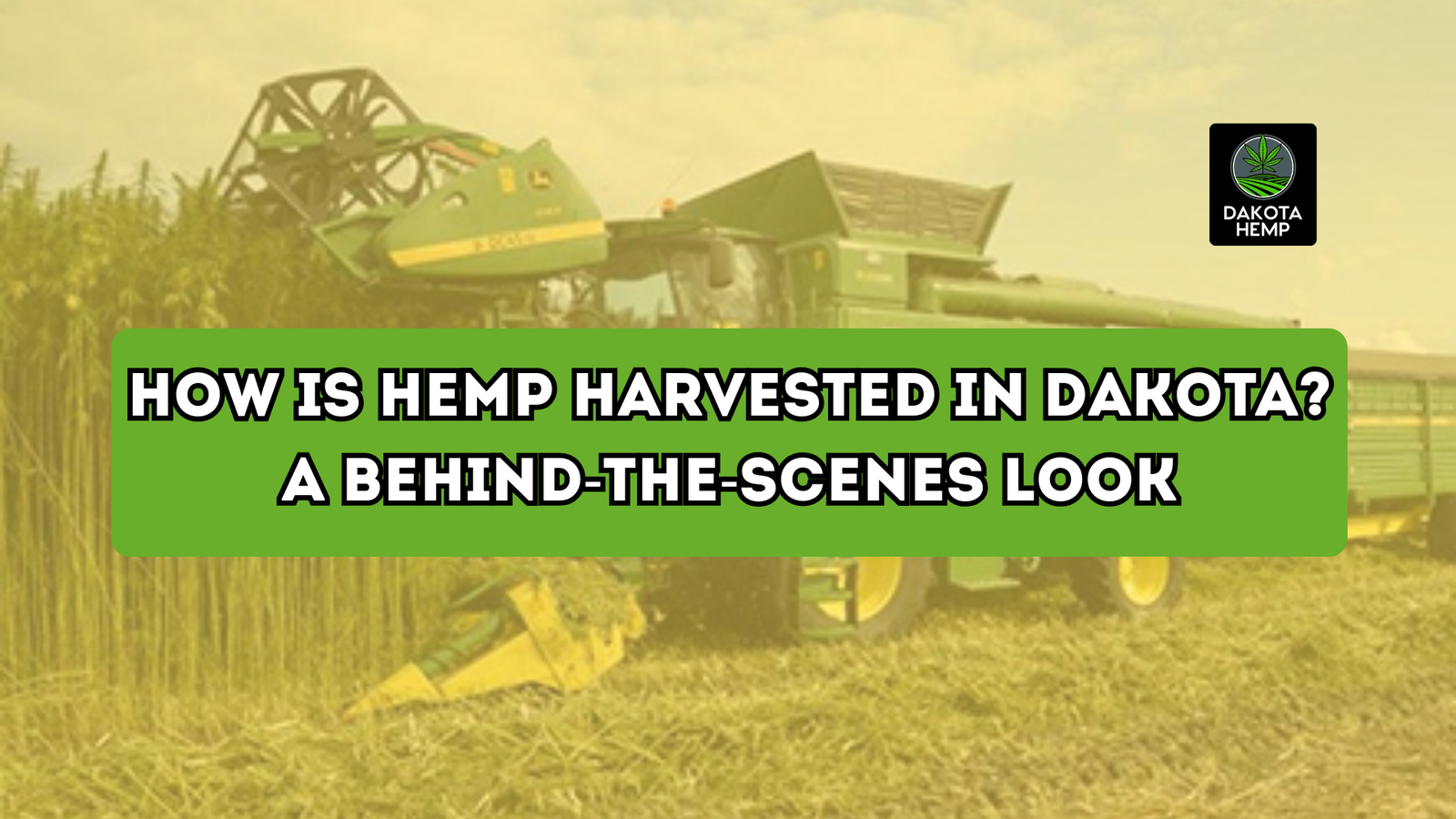
Holding your favorite bottle of premium CBD oil in your hands or stroking a square foot of fluffy hemp bedding feels light-years away from its origins: ten-foot-tall hemp plants waving in a South Dakota breeze. But everything starts somewhere, and for us at Dakota Hemp, that start happens at harvest.
Harvesting is the make-or-break season. It’s a mad dash against the first killing frost and Mother Nature. Hemp harvesting isn’t just about being timely—it requires precise execution, specialized equipment, and deep farming know-how. Here’s what goes into bringing in our “pioneer crop.”
Know Your Harvest: The Science of “Peak Potency”
Hemp isn’t like corn or soybeans; you can’t simply let it dry out in the field before bundling it up. Whether you are growing for cannabinoids or industrial fiber, timing is everything.
1. Cannabinoids (CBD/CBG) Floral Harvest
For our floral crops, we conduct close microscopic analysis of the hemp’s “trichomes.” These are tiny, crystal-like resin glands on the flowers. As cannabinoids reach peak potency, the trichomes shift in color from clear to a milky white or amber. Catching this window ensures the highest quality extract for our customers.
2. Hemp Fiber and Hemp Hurd
When we grow hemp for construction materials or animal bedding, the harvest begins when the male plants release their pollen. At this stage, the stalks are at their absolute peak for cellulose content—strong and fiber-rich, but not yet too “woody” or brittle to process.
Meet Your Methods: How We Cut the Stalks
Part of what makes hemp so difficult to harvest is its sheer strength. Hemp is used for rope for a reason; those fibers do not break easily. We utilize two main methods depending on the end goal of the plant.
Mechanical Harvesting (Industrial Scale)
Large-scale industrial hemp farmers typically use specialized headers that fit on either combines or dual-cut mower configurations.
- The Top: Separates and collects the flowers and seeds.
- The Bottom: Cuts the stalks into manageable sections.
Hand-Harvesting (The Boutique Way)
For our high-quality floral hemp, we frequently choose to hand-harvest. Cutting by hand allows us to ensure maximum care is taken with the plants. Large machines can jar and shake the precious trichomes right off the plant, reducing the “full-spectrum” qualities that Dakota Hemp is known for.
What is Retting? Nature’s Extraction Process
Retting is essentially nature’s way of helping us separate the fiber from the stalk. For fiber and hemp hurd harvest, the plants are left in the field after cutting to “field ret.” Natural bacteria and moisture break down the “pectins” (the biological glue) that bind the useful fibers to the inner core of the stalk.
Without retting, separating the woody hurd from the bast fiber is nearly impossible. We pay close attention to rainfall patterns during this phase; too much rain can cause mold, while too little means they won’t properly break down at all.
Drying and Curing: Moisture is the Enemy
As soon as we bring the floral plants in from the field, they must be dried immediately. While old-school methods involve drying on hay racks, this can lead to mold growth in as little as 24 hours.
At Dakota Hemp, we employ temperature-controlled drying methods that slowly bring the flowers to around 10% moisture. For our CBD flowers, this curing process is nearly identical to aging fine wine—it allows the chlorophyll to die down so the natural aromas (terpenes) can truly shine.
CBD Hemp Harvest FAQ
Q: When does the hemp harvest typically happen in South Dakota? A: Between late August and mid-October. The trick is to finish before Mother Nature unleashes freezing temperatures.
Q: Does harvesting hemp require special equipment? A: SOMETIMES. Unlike corn or soybeans, most regular combine parts simply can’t handle hemp’s powerful fibers. All of our farming equipment is slightly modified to be “hemp-ready.”
Q: What happens to the hemp after it’s harvested? A: Floral material is prepared for oil extraction and sent to a licensed processor, while stalks are decorticated into fiber and hemp hurd in our own decortication facility located in Wakonda, SD.
Q: Can you harvest hemp when it’s raining? A: NO! Harvesting wet hemp is incredibly difficult and dramatically increases the chances of crop loss due to mold.
The Seed-to-Sale Commitment
The saying “you only get out what you put in” is especially true for hemp. By controlling every facet of the harvesting process, we ensure that no outside chemicals, mold, or junk find their way into our products.
South Dakota provides the earth; Dakota Hemp provides the results.